

Overview
In my role as Dean of Communication Arts, Humanities, and Fine Arts at CLC, I’m extremely proud of the work we’ve done broaden and deepen our relationships with a number of key community partners across our district, particularly our work to support and promote artists and student artists of color in Waukegan. Indeed, under my leadership, we have adopted a community outreach and engagement plan for the arts as one of our strategic priorities as a division–which in addition to developing/sponsoring a number of academic and community initiatives and events, has entailed playing a convening role with a range of public and private stakeholders to expand support for the arts across the county.
Background
CLC has had extensive programs in the visual and performing arts for decades, with particularly strong community engagement in our music, theatre, painting, and ceramics programs. The Robert T. Wright Community Gallery of Art has also served as a vital resource and cultural hub for community members to engage with one another through arts education, shows, and events on our Grayslake campus.
Despite this long and storied history, however, there was a perception among many district residents that the college had become quite insular, neglecting many artists and communities–particularly those that have been historically minoritized and under-represented in higher education Recognizing an opportunity not only to rebuild and modernize our programs, but to provide strategic leadership as a true community arts partner, we set about re-establishing connections with the diverse visual and performing arts communities within the county.
Actions Taken
Over the past three years, I have takes several steps to revitalize our connections with the fine and performing arts partners in the community. First, I successfully advocated for the restoration of a full-time curator and director of our Wright Gallery, and was able to hire Ann Rintz in this role. Having this role has allowed us to rebuild relationships with a host of community arts organizations and members while reestablishing CLC as a primary exhibition space.
Second, we began meeting regularly with important community arts organizations in Waukegan, including the Waukegan Arts Council, Waukegan Main Street, Three Brothers Theatre, and the Genesee Theatre. This work has included representatives from our Division team serving on the executive boards of several of these groups, which has allowed us to provide coordination and support between these stakeholders with an eye towards creating a comprehensive plan for arts outreach and education across the city and the county.
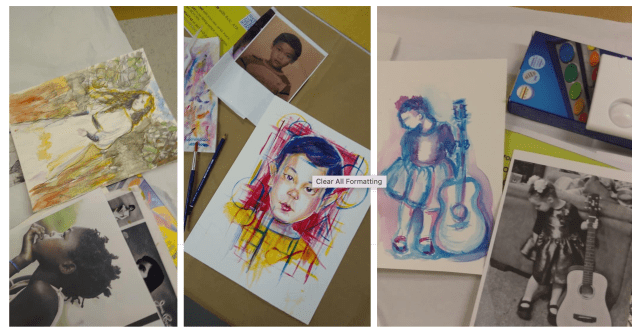
Third, we created two new Community Outreach and Engagement positions within the division aimed at planning and delivering a range of free workshops for community members across our district, with a special focus on the communities of Waukegan, North Chicago, and Zion-Benton. Katrina Davis-Salazar coordinates our programs in the visual arts, and as part of our strategic plan, works closely with CLC art faculty and area artists to deliver two different series in Waukegan: Engaging Arts Scholars in Excellence (EASE) is our youth program that aims to support elementary, middle school, and high school students in seeing their own potential as creators; while Artist to Artist (A2A) is meant to support working artists through workshops co-facilitated by CLC art faculty and community artists.

Our second program focuses on the performing arts, and has been led by Lamaiya Lancaster, who has worked closely with CLC faculty and a range of community artists and organizations to offer free dance, theatre, and music workshops throughout the community.
Finally, I’ve led faculty across our division to embark on a community focused interdisciplinary initiative we are calling Voices of Lake County, which seeks to engage students and district residents in a range of story-telling activities aimed at documenting and celebrating the lived experiences of their communities. In its first year, the project focused on, “The Postcards Project,” with participants encouraged to think both literally and metaphorically about postcards, “to explore issues of identity and place using a variety of mediums–textual, visual, and auditory.” In year two, our theme centered on “Lake County @ Work,” which examined how “work” within our region is evolving and shifting, with the goal of creating a vision for what the future of work could be or should be. The theme for the 2023-2024 academic year is “Sustainable Lake County,” an exploration of environmentalism and sustainability in Lake County through the lens of the arts and humanities
We are currently seeking external funding to support this work, including major grants from the National Endowment for the Arts, the National Endowment for the Humanities, and private foundations.
Results
Over the past three years these initiatives have been enormously successful, with over 40 free community arts workshops delivered. We have had over 2000 community members participating in one or more of these workshops and events.
 The division has seen a major increases in our social media traffic, ticket sales at our academic performances, and enrollment in both our credit and personal enrichment courses. We have also been approved $3 million to build new art and digital media and design classrooms on our Lakeshore campus which will allow us to further expand this programming.
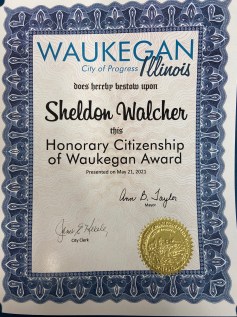
And on a purely personal note, I was extremely honored to be bestowed an Honorary Citizenship Award by the City of Waukegan in recognition for our work to engage, support, and promote the flourishing arts community in the city and the county.
 Administrative Portfolio